
Can Cracked Windshield Repair Prevent Full Replacement?
Key Takeaways
-
Determine crack size, type, location, depth, and spread quickly so you can decide if a repair is safe or if a full windshield replacement is required. Take this evaluation to discuss correct solutions and cost with an expert mechanic.
-
Be proactive with any crack or chip so it doesn’t spread, increasing your costs and diminishing your vehicle’s structural stability. Repairing cracks early assists in maintaining clear visibility and prevents your vehicle from failing safety inspections.
-
Know your insurance and deductible before booking service so you know what you’ll owe. Ask your insurer or shop if glass repair programs, promotions or rewards can reduce your dollar amount.
-
Select a certified, accredited auto glass company that employs quality materials and advanced repair techniques such as professional resin injection, UV curing, and polishing. Ask for a clear explanation of the repair or replacement procedure and verify that the work meets manufacturer and safety standards.
-
Keep the cracked area shielded from moisture, dirt, extreme temperatures, and road debris until repaired. Don’t power wash or otherwise aggressively clean the windshield so the resin can bond and provide a long-lasting result.
-
Try to plan repairs before a vehicle inspection or a long trip, so you avoid getting pulled over by the cops or failing inspection or having the crack spread at highway speed. This not only helps maintain your car’s safety and resale value but ensures that your vehicle is up to code with local laws.
Cracked windshield repair is repairing chips or cracks in glass so the damage doesn’t extend and the vision remains secure and transparent. Tiny cracks usually arrive via rocks, debris, or temperature shock and expand whenever a car hits a bump or encounters intense heat or cold. Most contemporary repairs employ resin to fill the crack, which can strengthen the area and reduce glare, and is frequently less expensive than a full replacement. Laws in most states mandate an unobstructed sight line for the operator, which means procrastinating can cause unsafe conditions and citations. The sections that follow discuss repair strategies, costs, timing, and when replacement is more reasonable.
Assess Your Cracked Windshield Repair
Evaluating your cracked windshield repair begins with the damage. It then considers your vehicle specifications, insurance parameters, and what a professional shop can safely fix.
1. Damage Size
Size is usually the initial sieve. Many shops use simple benchmarks: cracks under about 15 cm (6 inches) and chips with a point of impact smaller than a dime often qualify for repair. A common rule of thumb is that chips no larger than a 25-cent coin and cracks no longer than a standard banknote can usually be treated with resin.
These limits aren’t arbitrary. They assist in ensuring the resin is able to permeate the entire area of damage and repair sufficient strength and transparency. Manufacturers and insurance programs often have their own charts, so a crack that one shop will fix another might just swap out. As a general rule, repairs are typically still possible if there are up to three chips in the glass.
Once the crack extends well beyond 15 cm or you encounter multiple chips connected by hairline cracks, most recommendations switch from repair to complete windshield replacement.
2. Damage Type
Damage shape is just as important as length. Common varieties consist of basic “chips,” star breaks with multiple arms, bullseye circles, combination breaks that combine the two, and long single line cracks. Clean, round chips tend to be the most repair-friendly as they feature a defined impact point and minimal branching.
Star, spiderweb, or edge-to-edge patterns distribute stress across the laminated glass and can compromise it more than their size would indicate. When small branches run all over the place, even if short, it is more difficult to stabilize. Several chips spaced throughout the glass present the same question.
If a crack or chip reaches the edge of the windshield, it can undercut how the glass supports the frame. That’s why edge cracks are marked as bad repair candidates.
3. Damage Location
Location is directly connected to safety and legal regulations. Damage near the outer edge can compromise structural integrity, particularly in a collision or rollover. Even a short edge crack can fail shop or manufacturer standards. Replacement is often the safer call.
That driver’s direct line of sight is another prime area. Most repair schemes will authorize a repair only if, post repair, no mark greater than roughly 6 mm (¼ inch) remains in that central field of vision. Even the best resin fill leaves a residue, and any blur or distortion in this region is worrisome.
Modern cars add another factor: cameras and sensors for advanced driver-assistance systems (ADAS). If a crack or chip obstructs, distorts, or is too near a forward camera, lane-keeping sensor, or rain sensor, fixes might not be permitted. It can’t block a camera or sensor at all for a repair to pass both safety and calibration checks.
Some states couple inspection requirements to these zones. For instance, if local regulations specify no severe damage in the swept zone of the driver’s wiper, you could fail inspection even if the crack appears insignificant.
4. Damage Depth
Windshields are made of laminated safety glass, typically two layers of glass with a plastic layer in between. A shallow chip that just nicked the outer surface is frequently a prime candidate for resin injection, which fills the gap and stops crack propagation.
If the impact pushes deeper, it’s a different story. If the pesky crack extends to the inner layer or is close to it, the laminate has relinquished more of its designed strength and most technicians will insist on replacement, not repair. From the outside, it’s difficult to determine if the inner layer is impacted.
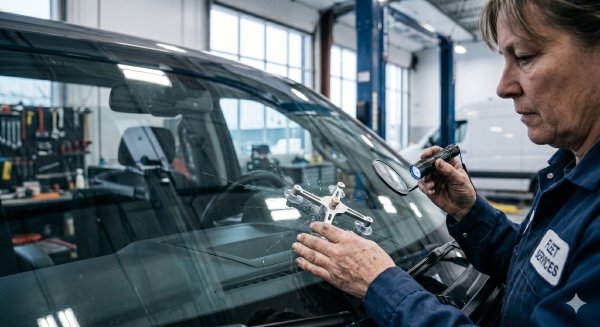
Your cracked windshield repair is evaluated by a trained technician who uses tools, light, and magnification to ‘read’ the depth and check for hidden branching. Their evaluation takes the guesswork out, which matters because if you misjudge the depth, it can cause sudden spreading later, sometimes after a temperature change or hard bump.
5. Damage Spread
Spread over time is a red flag. A tiny chip ignored can gradually become a long crack as glass expands when warm, contracts when cold, and flexes on rutted roads. New branches, a crack that advances a couple millimeters a week, or a line that morphs after a frosty night all indicate active movement.
Once your crack is spreading, the chances of a neat, long-lasting repair plummet. Resin can still stall some, but not necessarily bring full stability back. The more you delay, the more you transition from a quick fix to a complete replacement, which increases both price and duration.
From a cost and convenience angle, lots of qualifying chip fixes wrap in less than an hour, frequently with same day or next day appointments. That’s why repairing a dime-size chip or a short, stable crack early is typically the more economical course than waiting until the entire windshield has to be replaced.
Why Immediate Action Matters
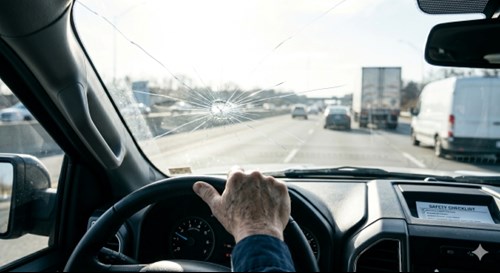
Here’s why immediate action is crucial. Damage that appears superficial can expand rapidly, increase expenses, and even subtly compromise safety for all passengers.
Structural Integrity
A windshield is a load-bearing component of the vehicle, not merely a sheet of glass. In the event of a serious front impact or rollover, it helps brace the roof and keep occupants inside the cabin. When a crack occurs, that support diminishes, particularly once it extends beyond 7 to 15 centimeters or breaches the inner glass layer. In a worst-case crash, a compromised windshield can make roof crush more probable and lessen the protection you expect from seat belts and airbags.
Airbags rely on a good windshield, too. On most cars, the front passenger airbag presses against the glass to backstop it as it inflates. If the glass is already stressed by a long crack, the impact of deployment can cause the windshield to bow, pop out, or shatter in such a way that shifts the airbag’s trajectory. That can translate to reduced padding and increased risk of injury, even when every other mechanism functions as intended.
Cracked or chipped glass is even more prone to shattering into sharp shards when impacted. The laminated design of today’s windshields allows it to keep pieces together, but when a crack reaches the inner layer, that safety buffer diminishes. Immediate repair helps return strength closer to original equipment standard and minimizes the likelihood that a minor chip turns into an urgent weak point.
Visibility Concerns
Even a minor chip can interfere with your perspective of the road, particularly when sun glare shines upon obliquely. In bright sun, in the dark with headlights approaching, or in torrential rain, a crack can scatter light, cause faint ghosting, or obscure something tiny like a runner or a piece of metal. If the damage sits in the driver’s direct line of sight, the impact is more potent and more distracting.
Cracks cause damage to wiper blades. A longer crack can catch the rubber lip, cause skipping and leave unwiped streaks exactly where you need a clear view in rain or snow. If water permeates the crack and freezes, the expansion can extend the damage and render the blade track less smooth than ever the following day.
A lot of areas have strict policies about this. Driving with a cracked windshield, particularly when the damage is in the driver’s line of sight, can cause your car to flunk an inspection and may be illegal under local traffic laws. That may result in fines or a directive to repair the glass before driving again. Maintaining clear, unbroken glass is not just a convenience; it assists you in complying with laws and avoiding getting a ticket.
Cost Escalation
Windshield cracks typically do not remain the same size. Heat, cold, and vibration from driving make the glass expand and contract. A minor stone strike chip could appear solid for weeks, then expand when the temperature plummets at night, transforming a fast fix into a complete replacement. The more a crack sits, the closer it is to reaching that 7 to 15 centimeters (3 to 6 inches) range of no return where you can no longer or shouldn’t repair.
Preventative maintenance repair is typically a fraction of the price of wholesale replacement. The table below gives a general sense of how costs can compare. Actual amounts vary by region and vehicle type, but the relationship is similar:
|
Scenario |
Typical service |
Approx. cost (USD) |
|---|---|---|
|
Fresh chip, under 2 cm |
Resin repair |
40–120 |
|
Short crack, 2–7 cm |
Advanced crack repair |
80–200 |
|
Long crack, over 7–15 cm |
Full windshield replacement |
250–600+ |
Insurance factors in too. Others include chip repair with minimal or no deductible and multiple glass claims or large frequent claims can factor into premiums. Taking action early might translate into a cheap one-time fix rather than a series of replacements on your history. A lot of shops and national chains have deals like ‘free chip repair with insurance,’ loyalty points or end of season discounts that reduce out-of-pocket expenses even further, but those are typically for minor fresh damage, not for extended ignored fractures.
The Unseen Risks of Neglect
A cracked windshield is more than a minor blemish. It impacts safety, code compliance, and the cost to restore over time, even when the damage appears to be small.
A contemporary windshield assists the body of the car in maintaining its structure. In certain cars, it accounts for as much as 45% of the structural integrity during a front-end collision and as much as 60% in a rollover. A chip or crack shatters this support. If you get in a bad hit, that glass might not hold the airbags in place or keep the roof from crushing down like it was engineered to do. Other cracks spread overnight due to temperature swings, rough roads, or a pebble impact. Cracks longer than approximately 7 to 15 centimeters typically require complete replacement. Waiting too long can transform an easy fix into a big project.
Injury impacts what you see. Even a stripe across your visor can refract light, glare at night, or obscure a walker or biker for a moment. In many places, it’s illegal to drive with a crack in the driver’s line of sight or near the edge of the glass, which can result in fines and a failed inspection. That translates to lost days from work, reinspection fees, and the expense of an expedited repair or replacement.
Unrepaired cracks typically end up being more expensive. Repairing a minor chip can be as little as $70 to $140 CAD. If the crack spreads and you require a new windshield, the cost usually escalates to somewhere in the range of $550 to $2,070 CAD, minus potential calibration for advanced driver‑assist systems. That very same damage can reduce resale value, incur lease return penalties, or spook cautious purchasers who interpret it as neglect.
Key legal and financial risks include:
-
Possible traffic fines for unsafe or cracked glass
-
Failed safety or roadworthiness inspections
-
Extra re‑inspection and administration fees
-
Lease-end charges for unrepaired windshield damage
-
Lower resale price or slower sale of the vehicle
Understanding Repair Technology
Windshield repair technology is designed to prevent cracks from propagating, restore strength, and maintain your visibility clear for safe driving. Contemporary systems cure in a regulated manner, so the glass endures the local temperature, chill, and shake — not just immediately following the repair but over months and years.
Resin Injection
Repair begins with resin injection, which fills the crack or stone break and unites the layers of laminated glass. A device caps the harm, then proprietary resin seeps under pressure into the crack so it can connect loose glass shards and return much of the windshield’s former durability. Since the early 70s, this has supplanted outdated cosmetic-only approaches, when shops could mostly conceal the damage but not actually strengthen it.
The very first complete system in 1971 even employed ultrasound vibrations to cleanse the break prior to a syringe injecting adhesive into it. Today, a quality repair tech still cleans out dust, moisture, or loose glass first, then selects a resin type that matches the damage size and location. Stone-breaks of approximately 50 mm diameter and single line cracks of up to approximately 350 mm are often repairable, provided they are not packed with dirt or contacting the outside edge.
Material quality is a big deal. Certain resins, such as those that are waterproof, hold up better in wet or humid climates. Tinted resins reduce the visibility of the repair, which is important for drivers who are bothered by glare. During injection, the technician looks for even resin distribution. Dark “legs” or air pockets within the crack are red flags. It’s fair to request a brief walk-through of the procedure at your appointment so you know what’s being done to your car.
Curing Process
Once filled, the resin has to be cured or hardened so the glass can bear load again. A special UV lamp illuminates the region and initiates a chemical transformation within the resin, converting it from a liquid to a solid adhesive that resists crack propagation under impact or torso twist.
A complete fix, involving cleaning, resin injection and curing, typically requires 30 to 45 minutes. This sounds rapid, but every step is technical. The timing and UV strength need to correspond with the resin type, glass thickness and occasionally the external temperature. If the curing is hurried, the repair might look good initially but break prematurely when the car strikes a pothole or the glass warms in the sun. Drivers need to wait until the technician says the resin is fully set before driving off or running the defroster on high heat.
Polishing Finish
Once cured, we level and polish the surface so your wipers glide across easily and your eyes aren’t stuck on your repair as you drive by. I want a surface that disappears into the rest of the windshield, with no sharp edges to snag dirt or washer fluid and no haze ring to draw your attention, particularly in the dark.
Polishing assists cut visual distortion. Shoddy repair can bend light in strange ways, which is a concern if that imperfection lurks smack in your primary line of vision. A meticulous technician will step inside and outside the car, inspect the repair at different angles, against the light and in shade, and compare it with the unblemished glass around it. We can request a last joint check. If you continue to observe prominent halos, color variations, or coarse lumps that catch a nail, the finish may require additional work.
Certified technicians and accredited facilities add another layer of safety and quality.
-
They adhere to proven repair thresholds, such as maximum crack length, so they don’t ‘repair’ glass that should be replaced instead.
-
With certified tools, UV lamps, and even resins, waterproof or tinted when necessary, they can add longevity and aesthetics.
-
They typically provide written standards and warranties, which is great if you drive in another area or resell the car.
-
They fit global standards, as windshield repair is now widely accepted around the world, not only in the USA but in dozens of other countries, so quality is more identical from country to country.
When Replacement Is Unavoidable
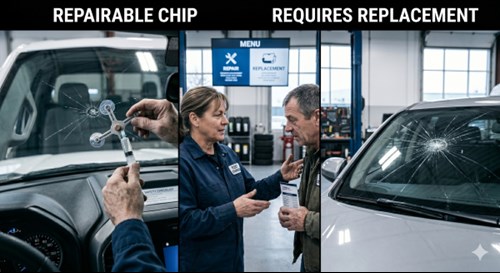
About when Replacement Is Unavoidable In those situations, complete replacement is the more secure and pragmatic option, even if a rapid fix initially seems simpler.
You require a new windshield if the glass is tempered, rather than laminated. Almost all front windshields are laminated. However, some older or low-end vehicles can have tempered glass. Tempered glass is designed to break into little bits when it hits something, so it won’t work with the typical crack repair. If you notice a “tempered” stamp on the glass or a professional verifies it, repair is out and replacement is the only secure option.
Size and depth determine the extent of repair. If a crack is longer than an average paper banknote (roughly 15 cm) or a chip is wider than a typical 1 USD-sized coin (around 2 to 3 cm), most professionals will suggest replacement. When a crack or chip passes more than halfway through the glass or distinctly severs the outer layer, the strength of the windshield is already diminished. Even if resin covers the scratch, the glass might not survive a crash or another hard impact.
Where the damage is is just as important as how big it is. Even a small crack or chip that extends to the outer edge of the windshield or lies within about 3cm of the exposed edge can compromise the entire sheet, as the edges bear a significant portion of the stress. Damage in the driver’s direct field of vision is another frequent reason to replace rather than repair, as even a great-looking repair can leave small blemishes, haze, or distortion. In the majority of states, road regulations mandate an unobstructed, crack-free view that neither blocks nor distracts the driver. Thus, replacement is a legal matter in addition to a safety measure.
A simple way to weigh repair versus replacement:
|
Factor |
Usually Repair |
Usually Replace |
|---|---|---|
|
Crack length |
Shorter than a banknote |
Longer than a banknote (~15 cm) |
|
Chip size |
Smaller than a $1 coin |
Larger than a $1 coin |
|
Distance from edge |
More than 3 cm from edge |
Less than 3 cm from visible edge |
|
Depth |
Less than halfway into glass |
More than halfway / through outer layer |
|
Driver’s view |
Outside main view area |
In driver’s direct line of sight |
|
Glass type |
Laminated |
Tempered (cannot be safely repaired) |
When replacement is unavoidable, auto insurance can soften the cost. Most policies with full coverage cover at least part of a new windshield, and in some locations, glass claims do not increase premiums. It’s practical to check your policy, ask your insurer how they deal with glass damage and whether they work with approved glass shops so you know both the price and quality to expect.
Choose Your Technician Wisely
Cracked windshield repair isn’t just filling a chip or swapping glass. Who actually does the work affects your safety, the durability of the repair, and the continued operation of your car’s safety systems.
Select experienced technicians who follow manufacturer guidelines and use quality parts
A good technician will examine the crack, measure its length in millimeters, observe if it extends to the edge and whether it falls in the driver’s primary view. From there, they determine if repair is safe or if full replacement is better. They don’t guess; they use established size and location limits and comply with the vehicle manufacturer’s repair standards.
Ask how they handle the job: what brand of resin they use, what curing system, and if the replacement glass, when needed, matches the original specs. Good glass is glass that fits with the body and the seal, and that is safety glass. Bad glass, weak resin, or hurried curing will make it leak, stress crack, or glare at night and strain your eyes. A good technician knows not to introduce sudden heat or cold during the process, as sharp temperature shifts can make a small crack spread across the pane.
Verify that the auto glass repair shop is an accredited supplier or part of a recognized glass repair program facility
Shop accreditation means they adhere to established standards on equipment, education, and inspections. Before you book, find out if the shop is part of a well-known glass repair network and that its techs are trained and certified for your style of work, including ADAS calibration if your car has cameras or sensors on the windshield. This keeps features such as lane keeping and emergency braking functioning as intended.
Verify that they have valid licenses, proof of insurance, and any formal program logos on their site or in the office. Check these against the program’s official list, not just the shop’s word. Be suspicious of any technician who offers to “repair” undamaged glass or pressures you to submit claims you didn’t intend. It’s a red flag for fraud and will get you in hot water with your insurer.
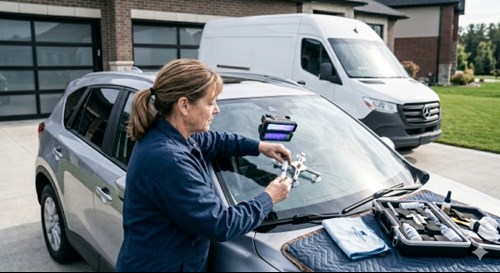
Look for mobile windshield repair services for added convenience and quick repair options
Mobile services that come to your home or work allow you to take care of cracks when they’re young, before they expand. This is important if you drive highways or park in intense sun, where tiny chips can expand quickly. A mobile unit requires just as much TLC as a workshop. Inquire about what equipment they arrive with, how they protect the work area from dust and rain, and how they maintain the glass at a consistent temperature during repair.
Verify that those mobile technicians receive identical training and certifications as shop staff and that they can perform the ADAS recalibration on location or schedule an appropriate follow-up appointment at a qualified workshop. For instance, certain vehicles require a static calibration, with targets positioned at specific distances in meters. Others require a dynamic road test with a scan tool. If a mobile service can’t back this up, you might have to stop by a partner shop after the glass work, and that plan should be transparent before you commit to anything.
Take advantage of triangle rewards, bonus offers, or exclusive promotions when booking your repair or replacement
Price counts, but it can’t be the only thing. A lot of reputable providers operate loyalty schemes, special offers or insurance partner discounts that reduce your payment while still using quality glass and authorized techniques. For example, you might collect points for every repair, receive a discount on a second car, or have chip repairs free for a period of time after a full replacement.
Get written quotes specifying labor, glass type, and additional fees so you can compare apples to apples. Balance short-term savings with long-term value. A slightly higher price from a qualified, accredited technician may help keep the car’s structure sound, keep airbags deploying as planned, and reduce the chance that you will pay again for the same glass in a few months.
Conclusion
A crack in your windshield may seem minor, but it demands attention and swift treatment. Glass will move with heat, cold and road shock. That little crack can spider web across the entire pane in a single nasty day.
Smart drivers examine the injury, learn a little of the technology, and choose a technician with real talent. A neat repair can preserve the glass, reduce expense, and maintain vision. Late action leads to complete replacement, more time, and more money.
For next steps, take a fast glance at your crack, make a mental note of size and location, then pick up the phone to a reputable glass shop or mobile technician and inquire with specific questions. Your next drive will be much more comfortable.
Frequently Asked Questions
How do I know if my cracked windshield can be repaired or needs replacement?
Small cracks less than approximately 7 to 8 centimeters and not near the edges or driver’s direct line of sight can sometimes be repaired. Longer, spreading, or edge cracks typically need full replacement. A trained expert will evaluate the damage and suggest the safest solution.
Is it safe to drive with a cracked windshield?
It’s generally unsafe, particularly if the crack is expanding, deep, or obstructing your vision. A cracked windshield is compromised and could shatter in an accident or when your airbag goes off. Get it checked and fixed or replaced quickly!
How long does windshield crack repair take?
Most pro crack repairs require 30 to 60 minutes. You can typically drive away shortly after, although certain resins require a brief curing period. Your technician will advise you when it is safe to drive and wash.
Will my insurance cover cracked windshield repair?
A lot of auto insurance covers cracked windshield repair with low or no deductible. Insurance coverage varies by policy and location. Call your insurer or check your policy before you book a repair or replacement!
Can I repair a cracked windshield myself with a DIY kit?
DIY kits can enhance very tiny chips or brief cracks, but outcomes range. Bad repairs can trap air, diminish clarity and even weaken the glass more. For safety and durability, professional repair is generally advised.
What happens if I ignore a small crack in my windshield?
Temperature fluctuations, road vibrations and moisture can rapidly transform a small crack into a big one. This could compel a complete replacement, cost more and compromise safety. Early repair tends to restore strength and save money.
How do I choose a reliable windshield repair technician?
Search for certified technicians, quality reviews and explicit warranty work. Inquire about their repair techniques, glass materials and recalibration for newer safety technologies. Good shops will walk you through options, pricing and safety standards in layman’s terms.
Save more on quality recycled auto parts. Western Auto and Truck Parts makes it easy to find reliable body, electrical, and engine parts at competitive prices.
Explore More Parts Categories:
Learn More From Trusted Sources:
Automotive Recycling Standards