
Key Takeaways
-
Knowing how your radiator, coolant, and related parts function together makes it easier to notice trouble before it’s serious and communicate effectively with your repair shop. Routine cooling system check and service minimize overheating risks and prolong engine life in Calgary’s fluctuating weather.
-
Look for typical failure symptoms like coolant leaks, overheating, rusty or discolored coolant, low coolant levels and dash temperature warnings. Scheduling a professional inspection and radiator replacement at the first sign of trouble can help you avoid costly engine damage.
-
When selecting used radiators in Calgary, select quality used OEM radiators in your vehicle’s original size, with the original mounting points and port layout. Check for visual damage, rust, weak tank seals, and damaged ports. Request pressure test results prior to purchase.
-
Don’t just compare OEM and aftermarket radiators by up-front price. Compare them by fitment accuracy, warranty coverage, and long-term reliability. Good used OEM radiators can provide great savings and great performance if they are adequately tested and certified.
-
Calgary’s climate and roads, with freeze-thaw cycles, road salt, and gravel, are especially hard on cooling systems. Use proper antifreeze, salt rinse, impact damage checks and early replacement of worn parts to keep your vehicle reliable in extreme temperatures.
-
Western Auto & Truck Parts Calgary has an extensive inventory of used radiators and cooling components, including fitment support, pressure-tested components and inspection reports. Call their team to pair a tried and tested used OEM radiator to your specific vehicle and cut the risk of compatibility or performance issues.
Used radiators Calgary are car and truck radiators that have been extracted from older or wrecked cars and offered at a cheaper rate than new ones. Calgary drivers can’t stop using them to reduce repair bills while still cooling engines and protecting from heat. Auto wreckers, salvage yards, and some local parts shops keep tested used radiators for common makes and models. Buyers typically test for leaks, rust, and fit prior to payment because every engine and trim may require a slightly different unit. To simplify the decision, the bulk of this guide runs through when you can find used radiators Calgary, how to quality check, and what prices come with it.
Cooling System Operation Basics

The cooling system keeps engine temperature in the safe range so the vehicle does not overheat in traffic or run too cold on winter mornings. For Calgary drivers looking at used radiators, knowing the basics makes it easier to judge part quality, spot problems early, and talk clearly with a repair shop.
Core Functions
The radiator functions as a heat exchanger. Hot coolant exits the engine, flows through the thin tubes and fins in the radiator, transfers heat to the air and circles back to the engine cooler. This cycle operates whenever the engine is running, whether it is a small sedan or a heavy-duty work truck.
Important components in this circuit are the radiator, water pump, thermostat, hoses, overflow tank, and the radiator fan. The water pump keeps coolant circulating. The thermostat prevents or permits flow in response to temperature so that the engine heats up quickly and then maintains itself in its optimal range. The overflow tank contains some additional fluid as it expands and contracts. It does this by pulling air through the radiator when the speed of the vehicle isn’t sufficient.
Each component has to function as a unit. A weak pump, stuck thermostat, or warped radiator can all mess up temperature management. In Alberta’s climate, winter nights can dip well below 0 C and summers experience heat under load. A failed part can swiftly escalate from a minor problem to complete engine destruction and expensive repair.
Fluid Circulation
Coolant circulates from the engine block and cylinder head — top heat accumulators — via hoses into the radiator and back again in a closed loop. The fluid is not just water; it is a blend with antifreeze that increases the boiling point and decreases the freezing point, so it protects you in hot and cold environments.
Forgot about the frozen water temperature being zero degrees Celsius. If you run just water and leave a car outside in the winter, ice can build up inside the block, expand, and crack metal. Newer extended-life coolants can last five years or 150,000 kilometers, but only if it’s the right type and not mixed with other formulas, which leads to sludge and loss of protection.
Transport Canada specifically recommends checking the heating and cooling system, radiator hoses, radiator cap, water pump, thermostat and coolant/antifreeze as part of your vehicle winter preparation
Hoses, clamps and connections have to remain tight and dry. Any leak or soft hose cuts flow and can leave an air pocket that stops proper cooling.
A basic check list can help:
-
Verify the coolant level in the overflow tank when the engine is cold.
-
Search for wet areas or dry residue near hose connections and the used radiator caps.
-
Verify that the proper coolant is in place and that it is not mixed.
-
Test acidity and freezing point once a year so rust inhibitors and antifreeze strength remain within specifications.
Heat Dissipation
Heat escapes from the coolant via the radiator core. Thin tubes carry fluid and pressed metal fins add surface area so more heat radiates into the air. On a used radiator, bent fins, clogged passages or internal rust reduce this surface area and hinder heat transfer, which manifests as the temperature gauge inching up on hills or while towing.
Airflow is as important as coolant flow. The radiator fan operates at low speeds or idle to draw air through the front grille, while at highway speeds the vehicle’s motion handles most of the work. If the fan motor, clutch, or electric controls fail, even a clean radiator will struggle in stop-and-go traffic.
Leaves, bugs or compacted snow on the radiator’s face all serve as a thermal blanket and trap heat. Minor fin damage can usually be straightened, but heavy crush or spread rust could indicate that the used radiator is close to its life expectancy.
To help spot small leaks and weak spots in the radiator and cap, shops frequently employ pressure testing and combine that with a basic visual inspection of fins, tanks, and seams. For Calgary purchasers, requesting these tests on a used unit provides a better sense of how effectively it will shed heat once mounted.
Failure Signs in Calgary Vehicles
Radiator failure in Calgary tends to manifest well ahead of heater or engine failure, and catching it early prevents significantly higher repair bills down the road.
Top signs of radiator problems include:
-
Coolant leaks under the vehicle
-
Engine overheating or running hotter than normal
-
Rusty, brown, or sludgy coolant in the reservoir
-
Low coolant levels that keep dropping
Coolant leaks are perhaps the most obvious early sign. Most leaks appear as neon green puddles beneath the front of the car, but some newer coolants are orange, pink, or yellow, so any odd-colored fluid on the ground is worth checking out. If the leak is minor, you may just notice wet spots around hoses, the seams of the radiator, or near the water pump. Coolant that must be topped up every few days is low because the system is leaking it, not using it.
Overheating is another major alert. The temperature gauge that normally rests near the middle while driving may begin to creep up on long hills, in traffic, or when you run the A/C on a hot day. In winter, the engine can still overheat if coolant cannot circulate properly through a clogged or failing radiator. Any rapid surge into the red or a dashboard temperature warning light means stop, cool the car, and have it checked.
It’s in the coolant itself that speaks volumes. Fresh coolant often appears bright and transparent. If it turns brown, rusty, or thick, that means the radiator and passages could be corroding inside. That sludge reduces flow, increases engine temperature, and stresses other systems, from the water pump to the head gasket.
Since Calgary’s cold winters already harden cars, a weak radiator increases danger. Cold can thicken engine oil, so some drivers switch to low-viscosity oil to help it move faster at start-up. Batteries lose capacity when it’s cold, and a borderline charging or electrical system may quit earlier when moisture and salt corrode wiring and connectors. That same moisture and corrosion can then attack radiator parts and hose clamps. Icy roads contribute to making brake and steering problems more dangerous, so you want dependable engine cooling when you require full control and consistent power.
At the first hint of leaks, overheating, or bad coolant, a thorough cooling-system inspection and timely radiator replacement keep the car safe and reliable for Calgary’s weather.
Select Used Radiators Calgary
Used radiators Calgary may reduce repair expenses. They must be thoroughly inspected. We concentrate on quality OEM pieces from reputable manufacturers, sourced from donor vehicles with transparent histories. Age, mileage, and service history are important because they influence the actual in-use lifespan of the radiator.
Before purchasing, inquire about the origin of the radiator, the mileage on the donor vehicle, and whether it was ever fixed or re-cored. A unit from a lightly driven vehicle with consistent coolant changes is generally superior to a bargain basement component with dubious background. This is true if you purchase from a local salvage yard or recycler or from an online vendor.
As always, verify fitment by OEM part number or VIN. Matching dimensions, mounting points, and port layout is as important as condition. Because many used radiators come with no warranty, a wrong fit or concealed damage can easily transform a “deal” into rework and unexpected labor overhead. Some buyers opt for refurbished or rebuilt radiators instead, which can be more expensive but typically offer rudimentary testing or a limited warranty.
Request test data when you can. A pressure test report, notes on leaks, and pictures of the core, tanks and ports provide a more detailed image than just a quick eye-ball. If you can’t view them in person, ask for close up photos of all sides and any stamped numbers. Keep these on file so you can contrast them against a new part, like an Auto shack-style reference image, and send them off to a trusted mechanic.
Used radiators are very common at junk and salvage yards and online as well. Grade differs, take each unit as special. A marginally higher rate for a clean, pressure tested OEM radiator frequently makes more sense than the least expensive option with zero evidence of condition. Choosing wisely prevents overheating, coolant leaks and repair revisits.
1. Visual Damage
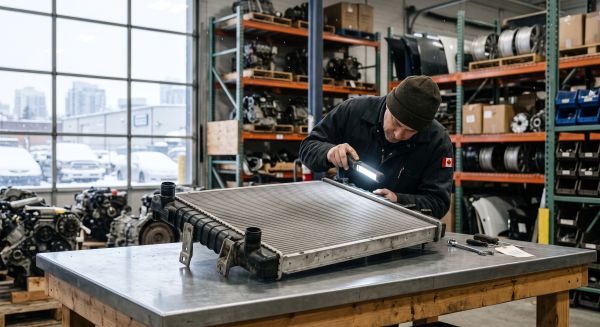
Inspect the radiator as a whole, from side tanks and mounting brackets to make sure there are no dents, cracks, bent fins, warped plastic or broken tabs. Light fin damage is common on used radiators. Deep bends that restrict airflow or cracks near hose necks and mounting points indicate impact or stress that could propagate after reinstallation.
Stay away from units with glaring patch jobs in key areas, like epoxy over tank seams, solder blobs on the core tubes or repairs on hose necks and brackets. They may leak fixes at low pressure and bust when the cooling system warms up to operating temperature. If you dare, position the used radiator beside a picture or swatch of a brand new Auto shack radiator or equivalent new unit. Compare the frame straightness, fin density and tank shape. Photograph any suspicious spots and send them along to the seller or your mechanic before you shell out, especially if you’re buying from an online retailer with no returns.
2. Core Integrity

Inspect the core face and between the fins for wet spots, green or white crust, or black stains indicative of leaks. Search for scale or rust buildup inside the tubes, as heavy deposits can obstruct coolant flow and reduce cooling efficiency even if the radiator is not leaking yet. A clean, even color is a good sign, more so than patchy or flaking.
Request that the seller pressure test or provide recent results. The core must maintain the indicated pressure with no abrupt decline and no new weeping around tubes or side supports. Stay away from any used radiator with a core that won’t pass basic pressure testing, as it can give out shortly after installation and cause overheating. Light issues like a little fin straightening or small copper tube repairs on older copper-brass units can sometimes be taken care of by a radiator shop. Some aluminum cores can even be professionally refurbished, but this only makes sense if the base unit is otherwise solid and fits your vehicle.
3. Tank Seals
Check plastic or metal tanks where they join the core. Check for dried coolant trails, hairline cracks or flattened, brittle, or swollen gaskets. Any evidence of “weeping” along the seam indicates that the seal has begun to fail and will probably leak again when subjected to heat and vibration.
Tank seals maintain system pressure, so they’re just as critical as the core itself. Assuming the core is good and the ‘defect’ is a slight seep at the tank seam, inquire at a radiator shop if new gaskets or resealing is feasible for that design. When shopping, be sure all tank bolts, crimp tabs, or clips are there and not bent or missing, as loose or mismatched hold-downs can keep a gasket from sealing even post repair.
4. Port Condition
Visually inspect and feel every inlet, outlet, and sensor port. Threads need to be clean, not cross-threaded or stripped. Hose necks must be round, with no clamp grooves from old clamps or plastic or metal to tank cracking. Corroded or pitted ports can make it difficult to obtain a leak-free seal, even with new clamps and hoses.
Clean the ports and test-fit a spare hose or sensor, if you have one, to check if it seats well. If you’re looking at a few used radiators for the same vehicle, jot down port size and layout in a quick table and pair that against your car’s existing hoses, sensors, and transmission cooler lines. This step reduces installation surprises and prevents you from resorting to dangerous adapters or stressed hose routing that can strain the connections.
5. OEM Fitment
We match the used radiator's core size, overall height and width, thickness and mounting points to your exact make, model, engine and transmission. Even minor variations in bracket position or port angle can lead to fit and hose routing issues once the radiator is installed in the engine bay. Use the vehicle's VIN or OEM part number to cross-check with the donor vehicle and seller's listing, which is helpful for imports or uncommon models.
Bad fit may result in hoses stretched at weird angles, fans out of alignment with shroud, or strain on transmission cooler lines causing them to leak or weaken cooling under load. If you don’t know, have a radiator specialist or a tech at the Calgary shop or salvage yard verify fitment before you purchase or install the part. A few shops in Calgary will mock the radiator up against your old unit or use catalog info to confirm dimensions, which helps when you have no warranty on the used piece and want to avoid double dip labor.
OEM Value Versus Aftermarket Units
For used radiators in Calgary, most choices fall into two groups: OEM (Original Equipment Manufacturer) and aftermarket. Both can work well, but they come with very different risks, costs, and long-term outcomes that matter when you want dependable cooling in a variety of conditions.
|
Aspect |
Used OEM Radiator |
Aftermarket Radiator |
|---|---|---|
|
Fit & compatibility |
Exact fit for the vehicle model |
Fit can vary by brand and batch |
|
Design & testing |
Built and tested to automaker standards |
Quality and testing differ across makers |
|
Price range |
Lower than new OEM, often mid to high price |
Often cheaper, about 400–900 (parts and labor) |
|
Performance |
Matches factory cooling and flow |
Can be equal, worse, or tuned for higher performance |
|
Lifespan |
Predictable if in good used condition |
With care, often 5–10 years, but more variable |
|
Warranty |
May have short used-part warranty from seller |
New aftermarket usually has clear written warranty |
|
Risk level |
Lower risk of leaks or fit issues when inspected well |
Higher risk if brand is unknown or very low cost |
OEM radiators are constructed specifically for your car’s unique cooling requirements, mounting points, hose sizes and sensor locations. That snug fit lessens installation issues, wonky hose angles or small leaks that rear their head weeks later. When you purchase a quality used OEM unit from a trusted Calgary recycler, you retain that fit and factory performance but bypass the premium of a new dealer part. For many drivers, this is the middle ground: known design, known test standards and clear behavior under load, with real savings if the core is clean and not corroded.
Aftermarket units are from third-party manufacturers who make parts to compete with OEM. Some emphasize low cost, others better cooling or thicker cores to reinforce weak spots in original designs. Given good maintenance and normal driving, many aftermarket radiators can last five to ten years, but longevity and construction quality vary greatly by manufacturer. A famous manufacturer can equalize OEM power, and a brandless unit can have flimsy containers or fragile seams. Warranties differ: new aftermarket often has written coverage, while used OEM may rely more on the breaker’s short return policy. Total cost over time comes down to this combination of price, warranty, and how far along you come before you hit your next coolant leak or overheating repair.
Calgary Climate Wear Factors
Calgary’s wide temperature swings, dry air and rough winter roads place high stress on radiators, particularly used ones. Cooling systems that can last years in a mild coastal city can wear out much faster in Alberta, so inspection and intelligent part selection is even more important than usual.
Freeze Cycles
Winters in Calgary frequently dip below −15 °C, with cold snaps hitting −25 °C or below. That sort of cold induces aggressive freeze-thaw cycles that cause metal and plastic to expand, then contract, time and again. Radiator tanks, cores, and solder joints can develop hairline cracks. Seams that once sealed well can start to seep under pressure.
Used radiators are more susceptible, as older plastic tanks and soldered joints have weathered multiple winters. Following severe cold, inspect for white or green crust at seams, subtle coolant mist on fan shroud, or sweet aroma in front of the car.
Coolant selection counts. Use antifreeze rated below local lows, not a generic mix designed for mild climates, so coolant doesn’t start to slush at −15 °C. Check the overflow tank and hoses; Calgary’s dry, low-humidity air, which is harsh on skin and everything else, can cause old rubber to harden and break after freezing nights.
The Alberta government aim for safer winter highways, this means checking items including belts and hoses, antifreeze, brakes, heater and defroster when winterizing a vehicle.
Road Salt
Winter road salt around Calgary accelerates rust on radiator fins, tanks and brackets. Powdery salt spray blows deep into the front of your car, and on a used radiator with thin metal, that can spell pinholes in no time.
Once roads dry, rinse front end and undercarriage, particularly radiator, with clean water. During regular inspections, check for rusty patches, flaking metal, or fins that disintegrate upon light brushing. As you replace units, opt for aluminum cores and tanks or coated steel whenever possible. These resist corrosion better than bare steel in salty slush.
Gravel Impacts
Numerous Alberta highways, back roads and work zones use gravel or loose chip seal, so your front is in constant assault. Stones can bend fins, puncture cores, or crack plastic side tanks. Rough and gravel-heavy routes can also put additional stress on other drivetrain components, including differentials.
About Calgary climate wear factors: Even minor dents reduce air flow and heat transfer, which can spike engine temperatures on extended climbs or warm days.
For vehicles that frequently traverse gravel or construction routes, install a basic mesh screen or shield in front of the radiator and condenser, and inspect suspension parts and other components exposed to road impacts. Following any ride over dirt or gravel, give your radiator a quick visual inspection for bent fins, wet discolorations, or loose mounting brackets. If a used radiator exhibits deep fin crushing, bent necks or leaks at impact points, replacement is safer than repair even if the engine hasn’t overheated yet.
Sourcing via Western Auto Parts

Western Auto & Truck Parts – Calgary’s most sensible source for used radiators and related cooling parts when you want reliable quality and transparent assistance, not uncertainty. It’s all about the right part for the right job, from daily drivers to industrial machines that don’t stop running.
They stock more than just passenger car radiators. They inventory used and reconditioned radiators, charge air coolers and oil coolers for light vehicles, heavy-duty trucks, transit buses and off-highway equipment. A logistics company with long-haul tractors can source matched radiator and charge air cooler sets, while a small contractor with an older pickup can still find a budget-friendly used radiator that fits. For industrial users, they do cooling systems for generators, municipal street cleaners, trash trucks and even locomotives, helping fleet managers keep mixed equipment under one service umbrella rather than separate niche vendors.
Fitment support is a cornerstone of the offer. They verify dimensions, hose locations and mounting points, and can even go through photos and measurements with you so they get the part to line up on the first try. Used and rebuilt units are pressure tested, with leaks and weak points flagged or repaired prior to sale. Some jobs, like on-site generator cooling repairs, can be difficult for users without space, tools or the time. Western assists in bridging this gap through service trucks that are mobile. These trucks come to the site and manage removal, repair and re-installation, as well as inspection reports that let you know what was done and why.
When a run-of-the-mill used unit won’t cut it, Western’s distribution network can provide custom builds. That ranges from coils with custom fins per inch and specific fin spacing to balance airflow and ruggedness and various header styles to mate to vintage or custom equipment. Lead times for making new coils hover around 6 weeks, which is relevant for scheduling shutdowns at plants, hospitals, or data centers that have backup generators. For emission-related parts, suppliers in this space handle DPF, DOC, SCR, and EGR cleaning with tried-and-true methods like flushing, baking, and flow testing, keeping both performance and compliance on track.
Key details about Western Auto & Truck Parts:
-
Based in Calgary, serving nearby regions with shipping options
-
Sourced through Western Auto Parts
-
Support for cars, trucks, buses, locomotives, and stationary generators
-
Fitment help with measurements, cross‑references, and photo checks
-
Pressure‑tested units with inspection notes for clear condition status
-
On-site cooling system repair and swap mobile service trucks
-
Repair and rebuild service for municipal and industrial fleets
-
Availability of custom coil builds with approximately six-week lead times.
-
DPF/DOC/SCR/EGR cleaning – bake, flush, test
-
Wholesale pricing options for distributors and mechanic shops
Conclusion
Something a great used radiator Calgary should have is more than a cheap price. It requires clean cores, solid tanks, and tight seams. Heat, cold, and road salt treat cooling parts roughly in this city. Weak metal and small leaks grow rapidly on local roads.
A used OEM unit typically provides better fit and longer run life than a cheap new part. Western Auto Parts can assist you in matching year, make, and engine. Staff will inspect hose necks, mounts, and caps on the spot. That reduces guesswork and saves time on the line.
To get going, gather your budget, jot down your vehicle information, and then call Western Auto Parts to inquire about available used radiator inventory for Calgarians.
Frequently Asked Questions
How do I know if my radiator needs replacing in Calgary’s climate?
Be alert for overheating, low coolant, rust, or leaks beneath your vehicle. In Calgary’s temperature swings, heaters coughing cold air or a sweet coolant scent spell trouble. A reliable mechanic can verify whether you require a new radiator.
Are used radiators in Calgary reliable for daily driving?
Used radiators can be reliable, too, if they’re carefully inspected and pressure-tested. Pick units that don’t display obvious cracks, corrosion, or bent fins. Purchasing from respected sources like Western Auto Parts increases confidence and minimizes the chance of premature demise.
What should I check before buying a used radiator in Calgary?
Find your vehicle’s year, make, model and engine. Check for leaks, bent fins and too much rust. Request pressure testing and warranty information. Make sure that the radiator is suitable for both your cooling system and your transmission, whether it is manual or automatic.
Is an OEM radiator better than an aftermarket unit?
ORIGINAL EQUIPMENT MANUFACTURER Radiators meet factory specifications and fitment, helping to provide consistent performance. Good aftermarket units will work great, but they differ by brand. If you want maximum reliability and easy installation, OEM or OEM-equivalent is generally the safer bet.
How does Calgary’s weather affect radiator wear?
Calgary’s hot summers and cold winters tax cooling systems. Rapid temperature changes subject the plastic tanks and seals to expansion and contraction that can cause them to weaken. Road salt and debris accelerate corrosion. Routine coolant replacement and checks assist radiator longevity.
Why consider Western Auto Parts for used radiators in Calgary?
Western Auto Parts specializes in locating tested, vehicle-specific radiators. They usually provide compatibility checks, inspections, and warranties. This minimizes the likelihood of leaks or fitment problems and can be more cost-effective than purchasing new radiators.
Can a used radiator handle towing or heavy use in Calgary?
Trust me, a good used radiator in good shape will take towing if it is at or better than the original specs. Cooled radiator: make sure you have proper cooling capacity, clean cores, and no internal blockages. For hardcore towing or extreme abuse, opt for heavy-duty or OEM-grade radiators and routine system inspections.